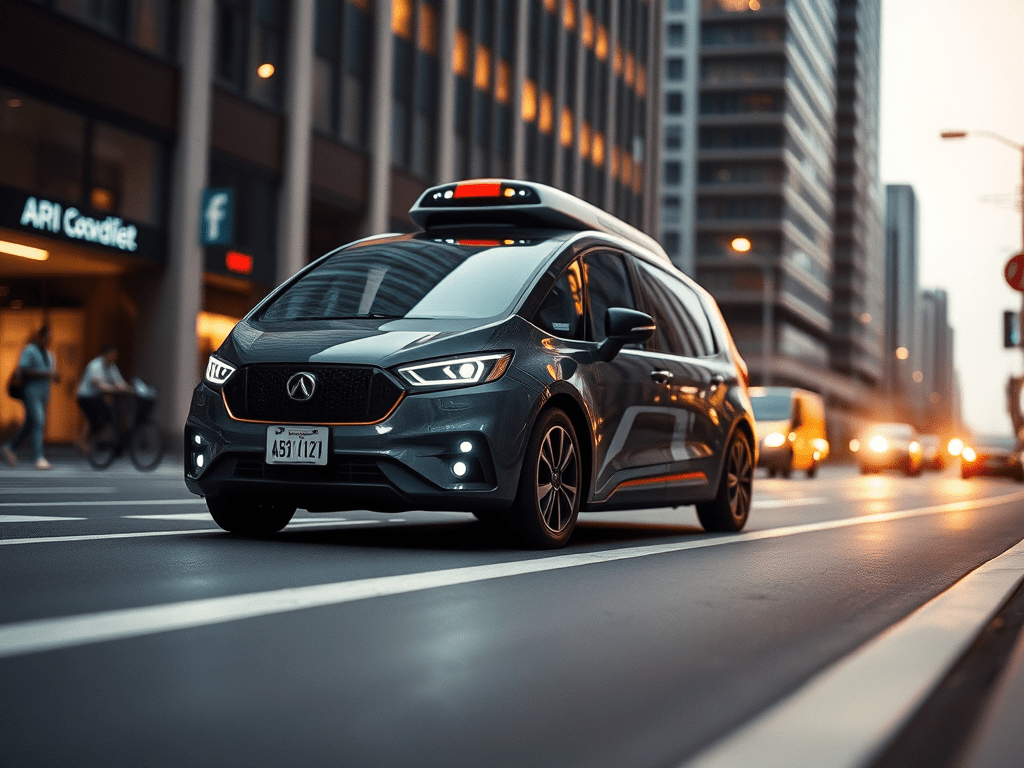
The integration of artificial intelligence in autonomous vehicles represents a transformative shift in the automotive industry, driven by advancements in machine learning, deep learning, and sensor technologies. This progression has facilitated the emergence of sophisticated systems that enhance safety and operational efficiency in real-world applications, from ride-sharing services to public transportation. As we stand on the brink of broader adoption of Level 4 and Level 5 autonomous vehicles, coupled with the rise of electric and shared mobility solutions, it is crucial to consider the evolving regulatory, ethical, and technological landscape that will shape the future of transportation.
Evolution of AI in Vehicles
The evolution of AI in vehicles has fundamentally transformed the landscape of the automotive industry, leading to the development of increasingly sophisticated autonomous driving systems. This progression can be traced back to the early efforts in the late 20th century when rudimentary AI algorithms were first employed to enhance driver assistance features. Initial implementations focused on essential functions such as adaptive cruise control and lane-keeping assistance, which relied on predefined rules and sensor inputs to improve driving safety and convenience.
As computational power and data availability have markedly increased, AI has evolved from these basic functionalities to more advanced machine learning and neural networks. The integration of these advanced AI techniques has enabled vehicles to better interpret and respond to their environments, thereby increasing their autonomy. For instance, deep learning algorithms now allow vehicles to recognize and differentiate between various objects on the road, including pedestrians, cyclists, and other vehicles. This capability enhances situational awareness and decision-making processes to a great extent.
Moreover, continuous improvements in sensor technology, such as LIDAR, RADAR, and high-resolution cameras, have provided the necessary data inputs for AI systems to function effectively. These advancements have allowed for real-time data processing and more accurate environmental mapping, further refining the performance of autonomous systems.
The regulatory landscape has also played a critical role in shaping the evolution of AI in vehicles. Governments and industry bodies have established frameworks to promote the safety and efficacy of autonomous driving technologies. These regulations have prompted manufacturers to rigorously test their AI systems, accelerating technological development and ensuring public safety.
Key Technologies and Innovations
Several groundbreaking technologies and innovations are driving the advancement of AI in autonomous vehicles. Central to these advancements are sophisticated sensor systems, advanced algorithms, and robust computing infrastructures. These technologies collectively enable the nuanced decision-making required for autonomous driving.
Sensor systems such as LiDAR, radar, and cameras provide real-time, high-resolution environmental data essential for perception and navigation. For instance, LiDAR (Light Detection and Ranging) technology generates precise 3D maps by measuring distances with laser pulses, allowing vehicles to accurately detect obstacles and understand their surroundings. Radar complements LiDAR by offering effective performance under adverse weather conditions, while cameras provide high-definition visual data for identifying objects, lane markings, and traffic signals.
Advanced machine learning algorithms play a pivotal role in interpreting sensor data. Deep learning, a subset of machine learning, is particularly significant for image and pattern recognition, enabling vehicles to accurately classify and respond to various stimuli. Reinforcement learning, another critical area, optimizes decision-making by allowing vehicles to learn from experiences and adapt to new situations.
Robust computing infrastructures, including centralized and edge computing, are essential for processing the vast amounts of data sensors generate in real time. Centralized computing provides robust processing capabilities, while edge computing guarantees low latency by processing data near the source. This dual approach ensures that autonomous vehicles can make swift, informed decisions.
These key technologies and innovations form the backbone of autonomous vehicle systems, providing the precision, reliability, and adaptability necessary for the seamless integration of AI into modern transportation.
Real-World Applications
Many practical implementations of AI in autonomous vehicles are already transforming various sectors, from ride-sharing and logistics to public transportation and personal mobility. Ride-sharing companies like Uber and Lyft have invested heavily in autonomous vehicle technology to enhance efficiency and reduce operational costs. These advancements enable vehicles to navigate urban environments with minimal human intervention, optimizing routes, reducing wait times, and improving service reliability.
In logistics, companies like Amazon and UPS deploy autonomous delivery vehicles and drones to streamline last-mile delivery operations. AI-powered autonomous vehicles can operate continuously, greatly enhancing delivery speed and accuracy. This reduces labor costs and minimizes human error, ensuring timely and precise delivery of goods.
Public transportation systems are also benefiting from AI-driven autonomous technology. Cities worldwide are piloting autonomous buses and shuttles to provide safer, more efficient, and environmentally friendly transit solutions. These vehicles can adapt to traffic conditions in real-time, offering commuters a smoother and more reliable service. Additionally, the integration of AI in public transit can lead to better route planning and improved accessibility, particularly for underserved areas.
Personal mobility is revolutionizing with the advent of autonomous vehicles designed for individual use. Companies like Tesla and Waymo are at the forefront, offering vehicles equipped with advanced AI systems that enhance driving safety and convenience. These vehicles can handle complex driving scenarios, providing users with a seamless, stress-free driving experience.
Safety and Ethical Considerations
Safeguarding the safety and addressing the ethical implications of AI in autonomous vehicles are paramount concerns for developers, regulators, and society at large. Deploying AI in such a critical domain necessitates rigorous validation to protect human lives. Safety protocols must be meticulously designed for real-world scenarios, from adverse weather conditions to complex urban environments.
The cornerstone of safety in autonomous vehicles is the development of robust algorithms capable of real-time decision-making. Redundancy in sensor systems, such as LIDAR, radar, and cameras, is critical to guaranteeing that the AI can accurately perceive its surroundings. Additionally, continuous learning and updating AI models are essential to adapt to evolving traffic conditions and emerging threats.
Ethical considerations are equally significant, particularly when addressing the moral dilemmas posed by autonomous systems. For instance, decision-making in unavoidable accident scenarios raises questions about the AI’s prioritization of human lives. Developers must embed ethical frameworks within the AI’s decision-making processes, ensuring transparency and accountability. This requires a multidisciplinary approach, integrating insights from ethicists, engineers, and legal experts.
Moreover, the potential for bias in AI algorithms must be meticulously examined. Training data must be diverse and detailed to avoid systemic biases that could lead to unfair or unsafe outcomes. The involvement of diverse stakeholders in the development process can help mitigate these risks, ensuring fair deployment.
Regulatory and Legal Challenges
Addressing the regulatory and legal challenges of deploying AI-powered autonomous vehicles is vital to guarantee their safe and ethical integration into society. The regulatory framework must evolve to encompass the nuanced complexities introduced by autonomous driving technologies. This includes adapting existing traffic laws, insurance policies, and liability standards to consider AI decision-making and machine learning algorithms.
One significant challenge is determining liability in the event of an accident. Traditional liability frameworks, which typically hold human drivers accountable, must be reevaluated to contemplate the roles of manufacturers, software developers, and vehicle owners. This reevaluation may necessitate the creation of new legal definitions and categories specifically for autonomous systems.
Moreover, regulatory bodies must establish rigorous testing and certification protocols to ensure the reliability and safety of autonomous vehicles before they are allowed on public roads. This includes setting standards for data security, which is paramount given the vast amounts of data these vehicles generate and process. Ensuring autonomous vehicles comply with privacy laws is also critical, as they inevitably collect sensitive information about passengers and surroundings.
Another critical aspect is the regulations across different jurisdictions. Autonomous vehicles will likely operate across state and national borders, requiring a cohesive legal framework to prevent a patchwork of conflicting rules. International collaboration and standard-setting organizations will be needed to achieve this harmonization.
While these regulatory and legal challenges are significant, they are m. Proactive engagement between industry stakeholders, policymakers, and the public will be essential in crafting regulations that support innovation while safeguarding public welfare.
Future Trends and Predictions
As advancements in artificial intelligence and machine learning continue to accelerate, the future of autonomous vehicles promises transformative impacts on transportation, urban planning, and societal norms. The integration of AI will drive significant improvements in safety, efficiency, and convenience, setting the stage for a new era in mobility.
One anticipated trend is the increased adoption of Level 4 and Level 5 autonomous vehicles, which require minimal to no human intervention. This shift will likely lead to reduced traffic accidents, as AI systems can process vast amounts of data in real time to make informed decisions, far surpassing human capabilities. Additionally, the move towards fully autonomous vehicles will facilitate the development of smart cities, where interconnected transportation networks enhance traffic flow and reduce congestion.
Electric autonomous vehicles (EAVs) are expected to dominate the market, driven by environmental concerns and regulatory pressures. The synergy between AI and electric propulsion will lower emissions and contribute to sustainability goals. Furthermore, battery technology and charging infrastructure advancements will further support the proliferation of EAVs.
Ride-sharing and mobility-as-a-service (MaaS) platforms will likely grow substantially as autonomous vehicles offer cost-effective and convenient alternatives to traditional car ownership. This will reshape urban landscapes, reducing the need for parking spaces and encouraging the development of pedestrian-friendly zones.
Lastly, integrating AI in autonomous vehicles will pave the way for personalized transportation experiences. Machine learning algorithms will analyze user preferences and behaviors, offering customized routes and in-vehicle services. This level of personalization will enhance user satisfaction and foster greater acceptance of autonomous technologies.
Conclusion
The evolution of AI in autonomous vehicles has notably advanced the automotive industry, driven by machine learning, deep learning, and sensor technologies. Real-world applications demonstrate improved safety and efficiency, while prospects indicate a shift towards Level 4 and Level 5 autonomy, integrating electric and shared mobility solutions. Safety, ethics, and regulation challenges remain, but the trajectory suggests a transformative impact on transportation, fostering a more connected, automated, and sustainable future.

 The Guru's World
Leave a comment